Key figures · one line each#
The diagrams that carry most of the exam vocabulary. For each one, the caption is what you should be able to say out loud in the exam — the picture is just the anchor.
Attention: queries, keys, values#
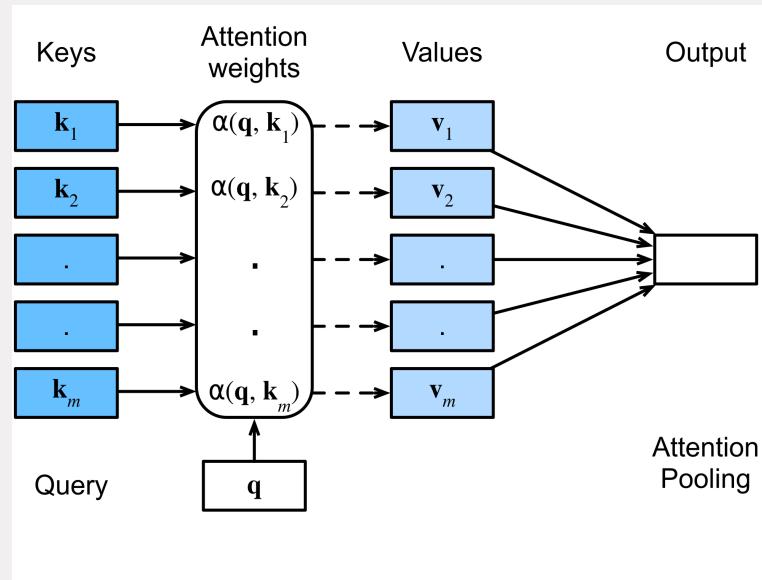
Self-attention: \(q\) from one position is compared with all keys; the softmax weights mix the corresponding values. Self = Q, K, V from the same sequence; cross = Q from one sequence, K/V from another. Trainable projections, unlike the picture's fixed \(v_i\).
DINO: two views, one teacher#
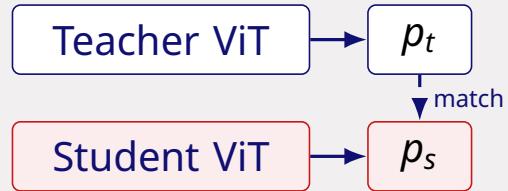
Two augmented views of the same image; the teacher (EMA of the student) produces targets, the student predicts them. The mismatch shown across positions is the cross-view / patch-level matching problem. Slow EMA teacher → stable targets, no collapse.
CLIP: contrastive image–text#
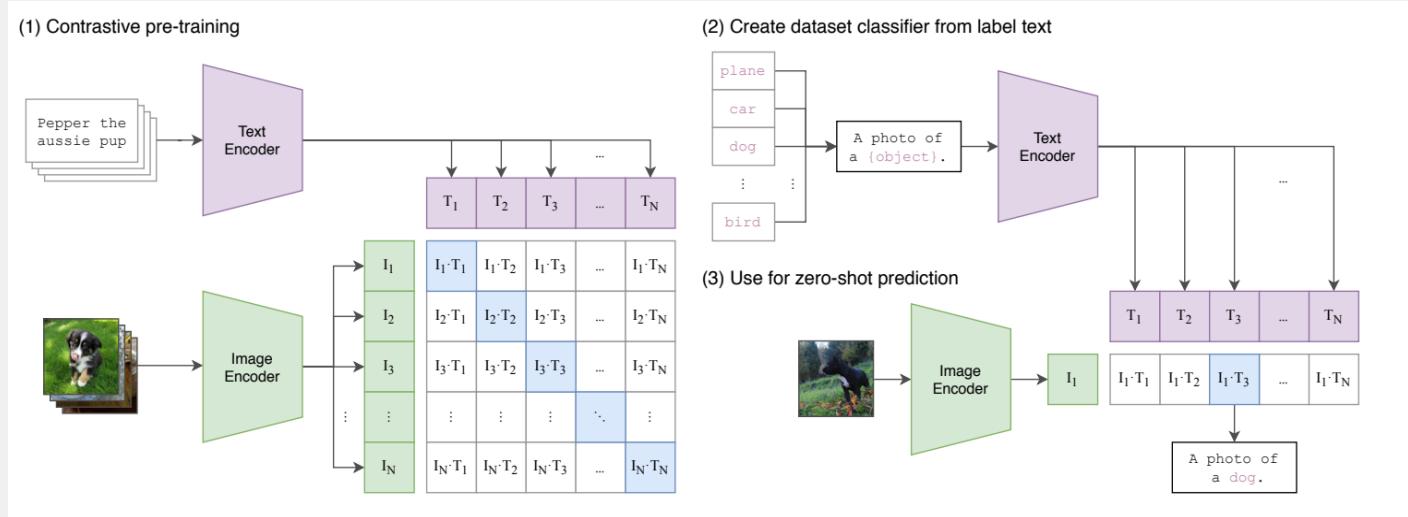
Maximise similarity of the \(N\) matching pairs, minimise the \(N^2-N\) mismatched pairs. Zero-shot classification = compare the image with text prompts; the softmax is over the candidate set, not a calibrated disease probability.
How an image enters a language model#
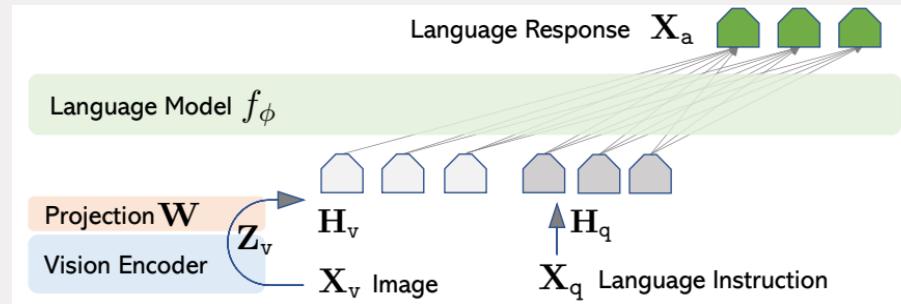
Matching the length of the vector is not enough: the projection \(W\) and alignment/instruction tuning are what make the LM able to read the visual tokens. Without training, the CLIP vector is out of distribution.
Workflow pattern: routing#
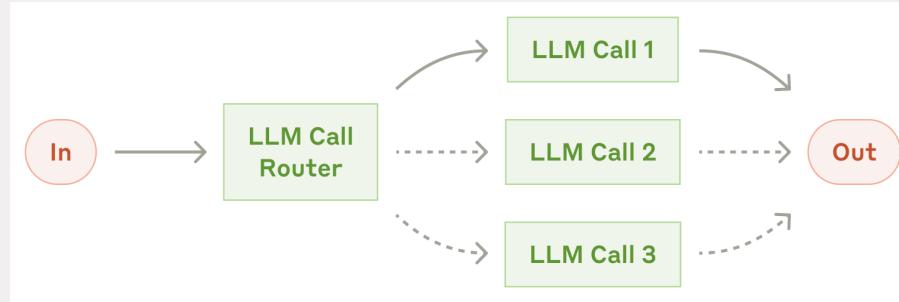
One path is selected. Contrast with parallelization, where all paths run and an aggregator combines them. This is the most common MCQ trap.
Workflow pattern: prompt chaining#

Fixed stages, each consuming the previous output; a gate decides whether to continue. Extract → draft → translate is chaining, not routing.
Workflow pattern: parallelization#
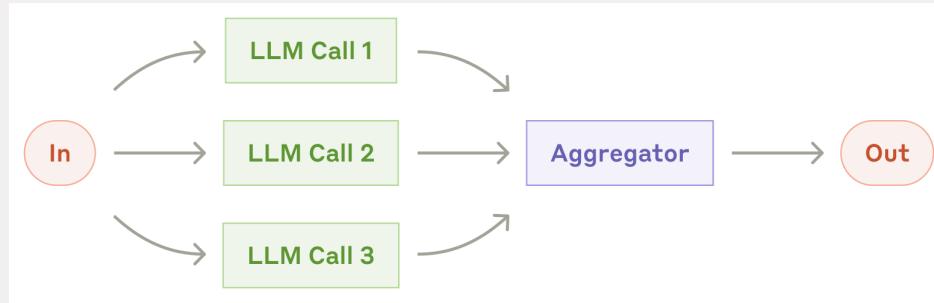
Subtasks are defined in advance and independent; results are aggregated. Use when the decomposition is known before execution.
Workflow pattern: orchestrator–workers#
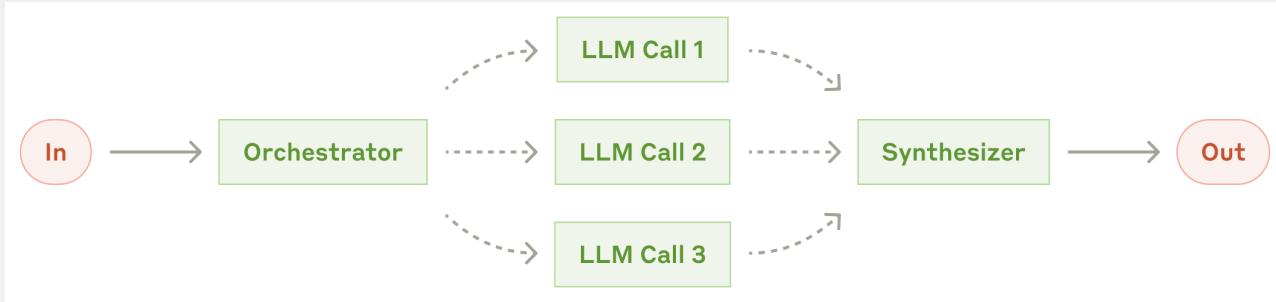
The orchestrator decides at runtime which subtasks are needed. Extra coordination cost: more calls/latency, error propagation, non-determinism, harder evaluation — justify it only when the paths depend on the case.
Workflow pattern: evaluator–optimizer#
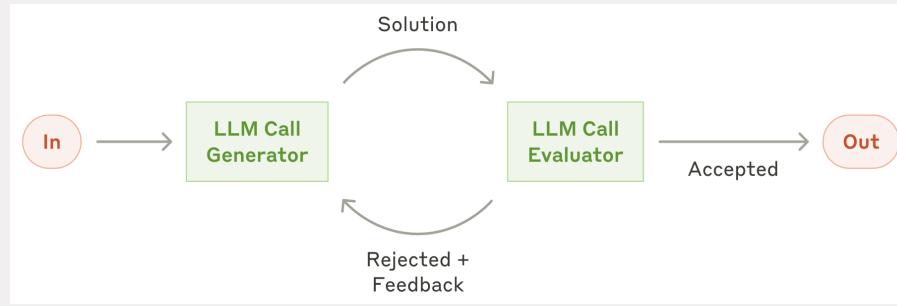
Generator drafts, evaluator checks against criteria and either accepts or returns feedback. Acceptance must be distinguishable from "revision limit reached"; validate the evaluator itself against human ratings.
The agent loop#
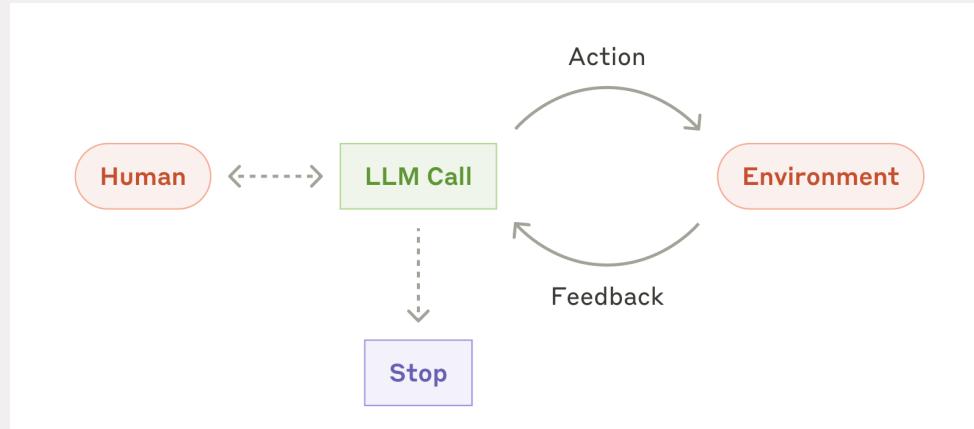
Reason → act → observe → repeat until a stop condition. The environment executes tools; observations come from the tool, not from the model's prediction. Use an agent only when the next step depends on observations.