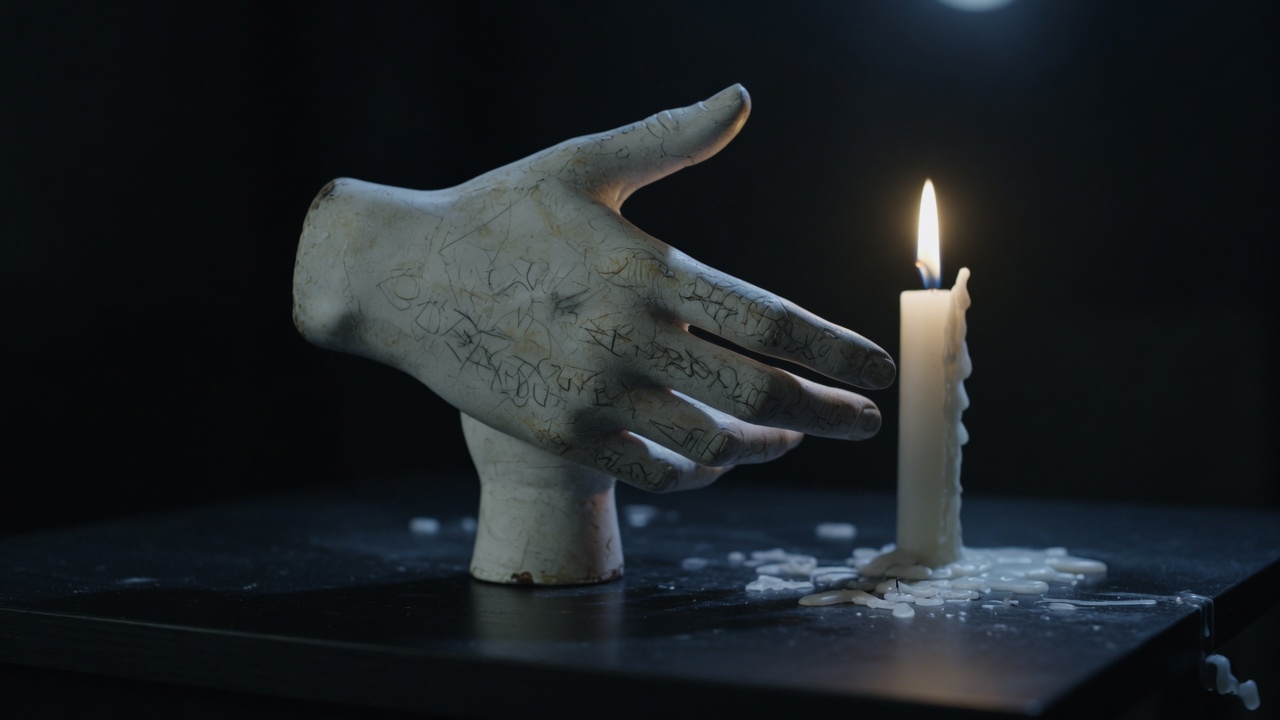
The dead will talk. They just won’t tell you the truth. The Philippou brothers’ first feature turns a party trick into a grief machine, then refuses to let Mia out of it.
You already saw it. This page assumes that. If someone else opens the link: the last act is the whole point, and it’s ruined here on purpose.
The short take
It looks like a possession movie for people who grew up on YouTube. That’s the bait. Under it, Talk to Me is about a girl who already lives like a ghost — ignored calls, a father she won’t sit with, a dead mother she still argues with — and a ritual that lets her outsource the conversation. The hand is a drug. The high is being wanted. The crash is that the thing on the other end is hungry, not sorry.
Sophie Wilde carries that without doing the usual scream-queen face. Joe Bird’s Riley is the scene people remember, and they should: the head-on-the-table bit is practical, ugly, and not a joke. The rest of the film is about what Mia does with the guilt of having handed him the thing.
What actually happens
Adelaide. A party. Cole finds his brother Duckett mid-possession; Duckett stabs him and kills himself. That’s the warning the rest of the teenagers treat as content.
A year after her mother Rhea died — sleeping pills, officially an accident — 17-year-old Mia hangs off Jade’s family instead of her own father, Max. A video goes around: kids grabbing a white embalmed hand, lighting a candle, saying two lines. Talk to me. Then I let you in. Ninety seconds. Blow the candle out, break the grip, or the spirit tries to stay. Die with one inside and you’re theirs.
Mia goes first. The thing that comes through clocks Riley immediately. They run a little long. She comes up buzzing. Next night everyone takes turns, phones out. Jade forbids Riley. Mia lets him have fifty seconds. The spirit wears Rhea’s voice. Mia won’t let them pull the hand. The clock dies. Riley tries to cave his own skull in and almost tears out an eye. Hospital. Catatonic, except when he wakes and the spirits try to finish the job.
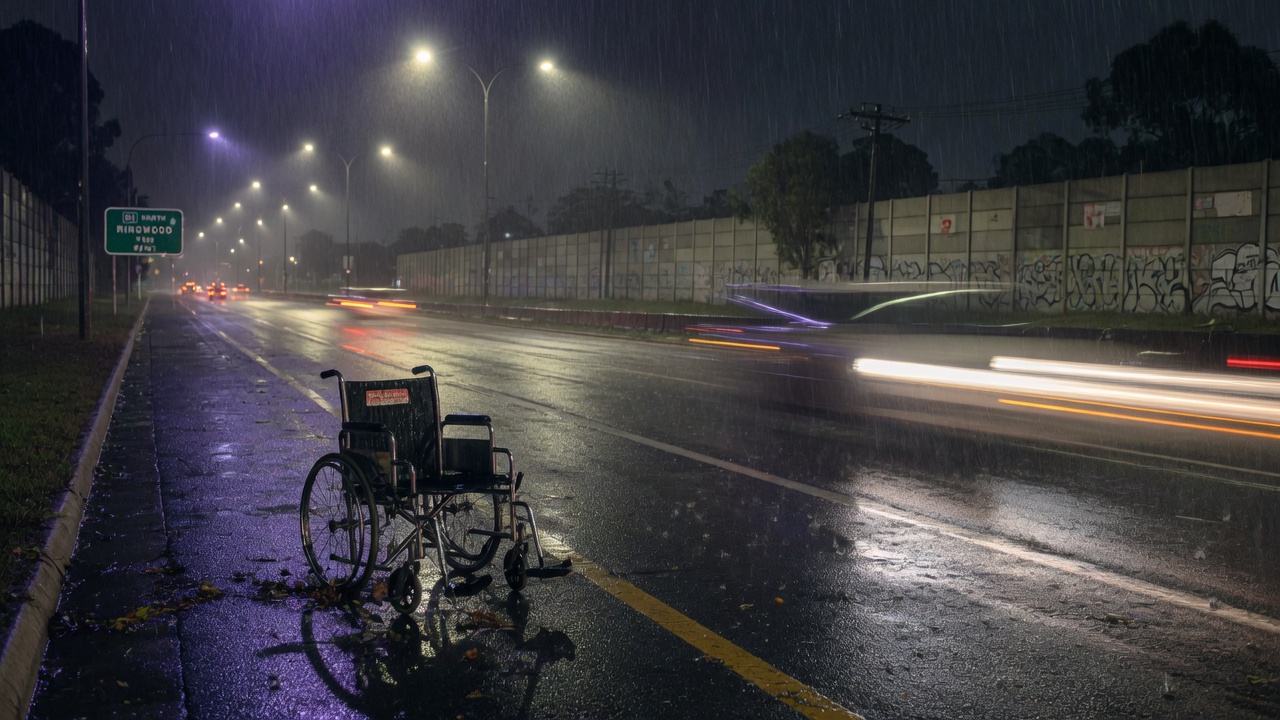
Mia keeps the hand. A spirit that looks like Rhea tells her the overdose was an accident, that Max is lying, that Riley has to die so he can be “free.” Max finally reads the suicide note he’d hidden. Mia, sure he’s one of them, stabs him. She wheels Riley to a highway. Rhea says push. Then: we’ll have him forever. Mia lets go of the chair and steps into the traffic herself.
The last minutes are not a rescue. Nobody in the hospital sees her. No reflection — the nightmare she already told us about. A light, which is not heaven. It’s another living room, another group of kids, somewhere that looks like Greece. A stranger holds the hand. Talk to me. I let you in. Cut.
The hand is a drug
Sue thinks Mia is using. Mia says she tried weed once. Then she finds something better: a ninety-second blackout that feels like love. They time it, film it, pass it around. First time is free. Second night they’re already chasing it. That’s not a metaphor the movie is shy about. Possession here is a high — lips, singing, sex, the body suddenly interesting again — and the 90-second rule is just harm reduction that nobody respects once they’re in it.
Hayley and Joss inherited a folklore (dead medium’s hand, candle, invitation) and sanded it down to a party game. Den of Geek is right that the ritual is Ouija plus Bloody Mary plus the old exorcist line that you have to invite it. The film’s trick is that the kids already know the rules and still blow them, the way people know the dose and still take more. Cole later says a living body will eventually spit a spirit out. Duckett’s prologue already proved that’s a comforting rumor. If they can get you to die while they’re in, they keep you.
Riley is younger and still open. The first spirit notices. That’s why the “we’ll take care of him” pitch works on Mia: she wants a version of her mother who will look after someone, and the thing wearing Rhea wants a clean soul to eat. When Mia uses the hand in the hospital and asks to see, she gets the real picture — Riley in a dark mass, being used. Not a ghost story. A feeding.
The dead lie
Most ghost movies still run on the old rule: the dead can’t lie, demons can. Talk to Me throws that out. These things look like your mother and tell you what you already need to hear. Rhea didn’t kill herself. Max is the monster. Kill the boy and I’ll keep him safe. Each line is cut to the exact hole in Mia.
Max hid the note to protect her. The spirit uses that kindness as proof he’s fake. The movie is nastier about love than it is about gore.
Rhea’s body was found clawing at the bedroom door. That’s the image Mia built a whole cosmology on: she was trying to live, therefore it was an accident, therefore Max is wrong, therefore the voice in the dark is mum. The note wrecks that. So the spirit wrecks Max. A fake father attacks her; she puts scissors in the real one. After that she’s isolated enough to steal a child from a hospital.
Justin Chang’s line is the right one: Wilde makes you see Mia as a captive of her own grief more than of any afterlife. The hand doesn’t invent the wound. It just answers when she says the title out loud.
What the movie is actually about
Not “phones bad,” though the phones are there. The Unaffiliated Critic had this clean: the movie is full of people who will not talk to the living. Missed calls. Headphones. Doors. Mia won’t sit with Max. Max won’t tell her the truth until it’s too late. Jade shuts her out after Riley. Everyone is starving for contact and aiming it at the wrong side of the grave.
That’s why the afterlife is so cheap. No heaven, no hell, no theology Daniel’s faith can touch. Just a black room full of people who didn’t get to finish a conversation. They want a body for a minute. Then they want you. TIME and Den of Geek both read the last shot as Mia joining that inventory — not punished by God, just added to the menu the next party will order from.
There’s a family curse shape too, if you want it. Rhea dies alone behind a door. Mia dies in traffic rather than become her, and becomes her anyway: another absence her father has to live with, another voice some stranger will invite in for a laugh. Depression and suicide as something that can occupy the next person in the house. The film is not subtle about that. It doesn’t need to be.
The ending, without the soft version
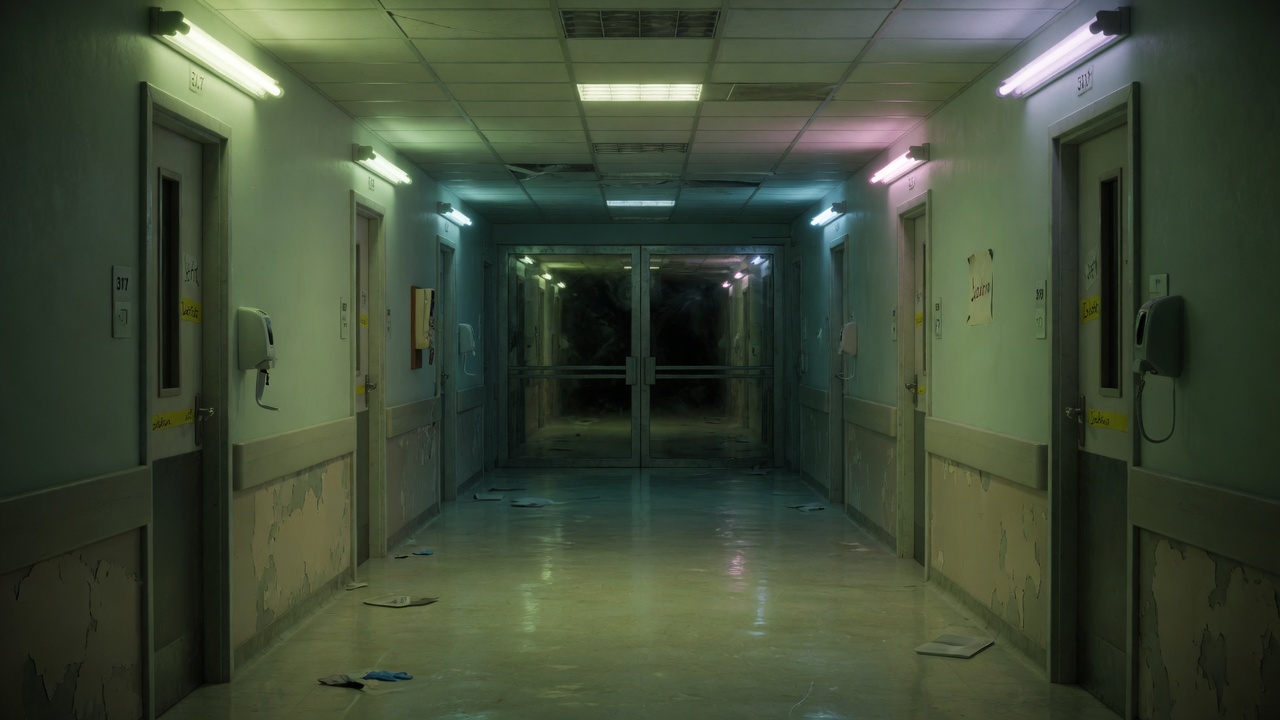
Mia does not wake up. Riley lives. Max lives. She is the one on the asphalt. The “healed” hospital is what she can see from the other side — the life that continues without her. No reflection. Lights out. A pinprick that should be the tunnel you’re supposed to walk toward.
It isn’t. It’s the candle. Somewhere else, the same hand is still in circulation. A kid who doesn’t know her name asks her to talk, then lets her in. She does what was done to her. The movie ends on the first second of someone else’s bad night.
Two things are true at once. She refused the sacrifice — she would not give them Riley, even after everything. And she still lost, because the system doesn’t need her to be evil. It only needs her to die. The kangaroo scene is the rehearsal: she couldn’t do the mercy kill, she left the suffering in the road, and later she puts her own body where the animal was.
Is Jade the one who shoves her? The cut is dirty on purpose. Doesn’t matter much. Either Mia jumps or the world knocks her in. The moral action already happened a second earlier, when she heard “we’ll have him forever” and let go of the chair.
Does it hold
Yes, mostly. First hour is tight: party noise, actual teenagers, a formal clock, practical effects that still look wet. Wilde never lets Mia become a thesis. Bird’s possession is the scariest Australian thing since The Babadook, which is not a coincidence — same producer, Samantha Jennings at Causeway. Sound does more work than the ghosts’ makeup.
The last act hurries. Scissors, abduction, highway: you feel the movie deciding to end. Variety called the script under-ballasted; the Austin Chronicle said the two families’ trauma was too much plot for the writers to land. Fair. Cole’s “they leave eventually” speech also fights the prologue. I think that’s the point — the kids are wrong about the rules — but it’s messy.
“Grief horror” was already a crowded aisle by 2022. This one earns the cliché because the grief has a mechanic: an invitation, a timer, a lie that fits. It is also genuinely fun in the way a YouTube-brained horror movie should be, before it stops being fun. That’s why it did $92 million on $4.5 million, picked up eight AACTAs, and why A24 announced Talk 2 Me before the year was out.
If you came out of it mostly thinking about the hand: watch it again for the doors. If you came out of it sad about Mia: that’s the correct ending. She wanted someone to talk to her. She got it.
Sources
Plot and credits: Wikipedia. Ending: TIME, Den of Geek. Disconnection reading: Unaffiliated Critic. Wilde/Bird: Justin Chang, LA Times. Reception: Rotten Tomatoes, Metacritic, Box Office Mojo. Stills on this page are original, not from the film.